
Most of the time our job is helping grass win. Occasionally, the honest answer for one specific corner of a yard is that grass was never going to win there — and a deliberate alternative makes more sense than a yearly losing battle.
Deep, Permanent Shade
Under a mature cedar or a dense stand of trees, some spots get so little direct light that no grass — not even shade-tolerant fine fescue — will hold up long-term. Rather than reseeding the same bare patch every fall, groundcover, bark mulch, or a shade garden bed is often the more honest long-term answer.
Clover, Reconsidered
Clover used to be a standard component of lawn seed mixes before selective herbicides made a monoculture grass lawn the goal. It fixes its own nitrogen, stays green with less water, and handles light foot traffic fine. For a low-maintenance side yard or a spot that's fighting grass anyway, a clover-grass blend is a legitimate option, not a failure to keep a "real" lawn.
Moss, On Its Own Terms
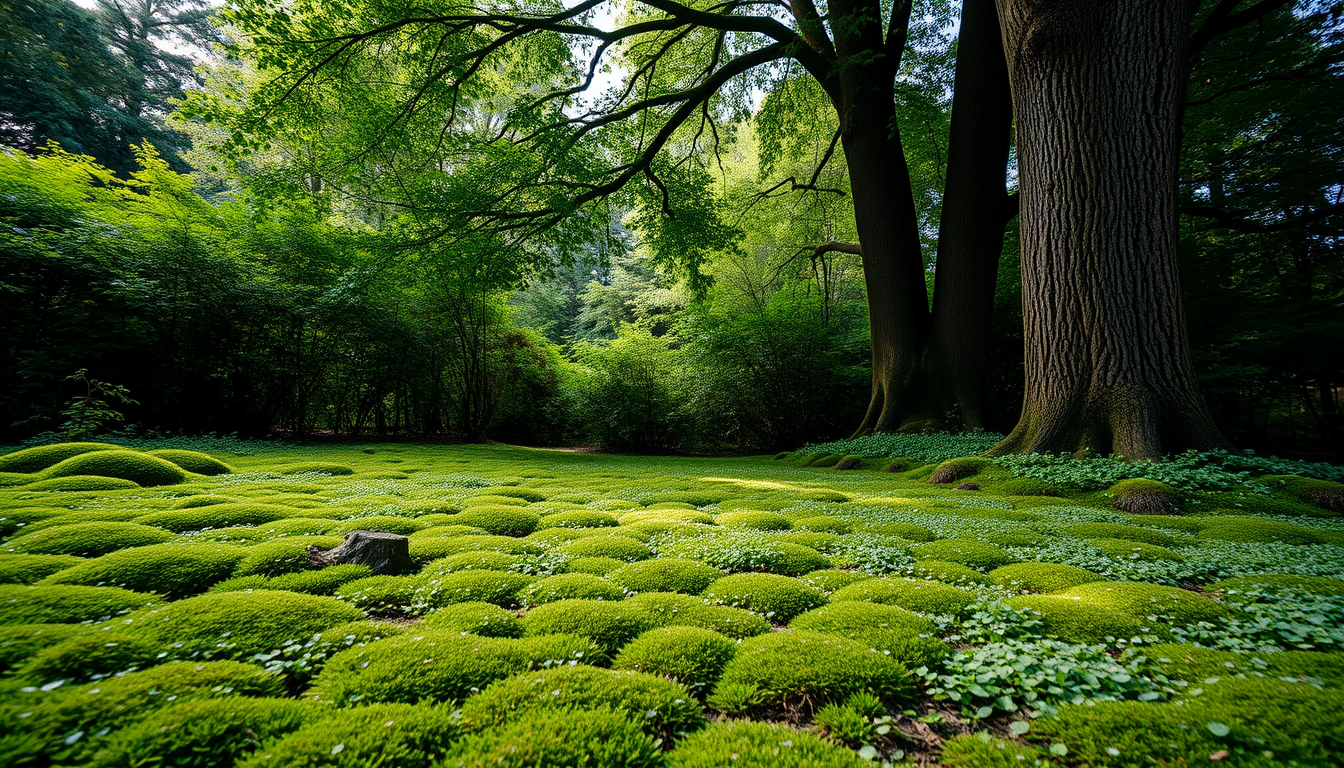
In the deepest-shade corners of a Cedar Mill or west-hills property, some homeowners choose to let moss be the ground cover on purpose — it's soft, always green, and needs no mowing at all. It's not for every yard or every homeowner's taste, but where grass has lost every year for a decade, it's worth considering rather than continuing to fight it.
The Honest Take
We'll always tell you if a spot is worth treating versus worth rethinking. Sometimes the best lawn-care advice is knowing which battles are actually winnable.