
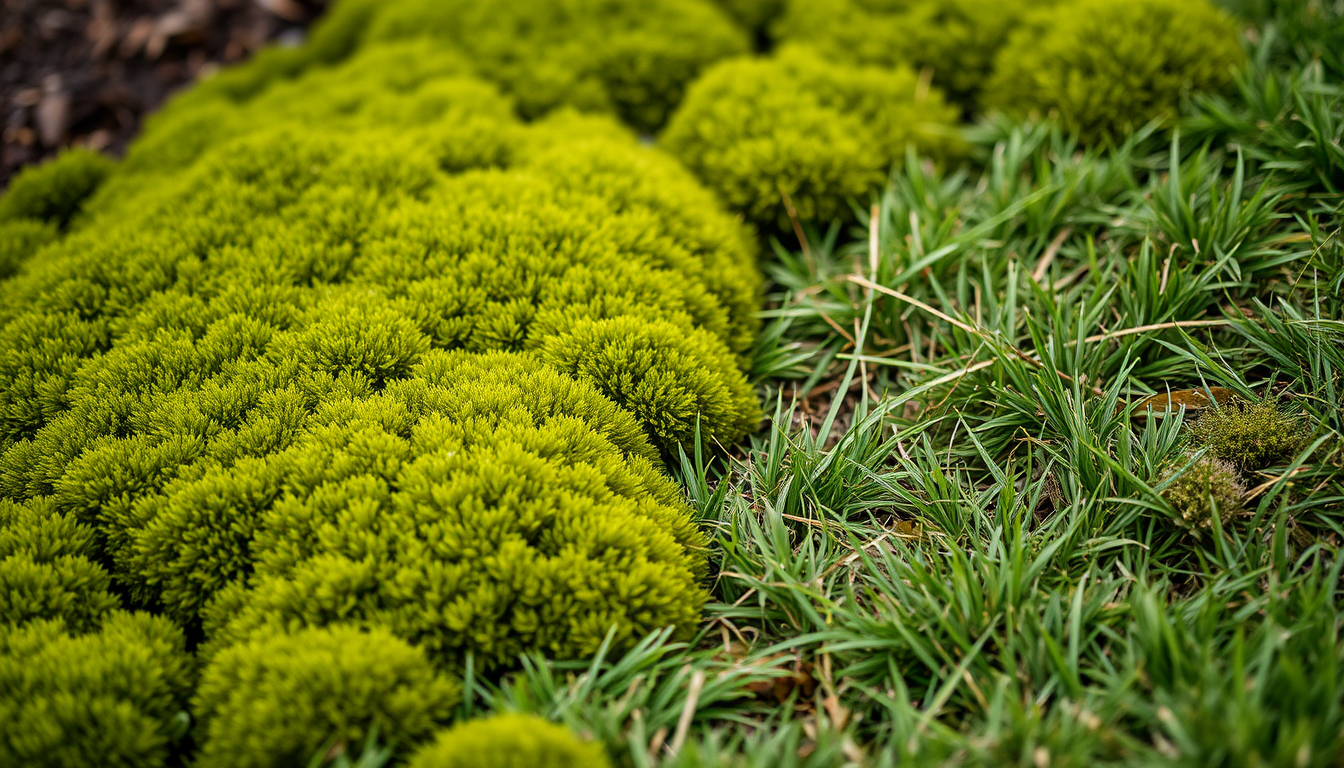
Moss is the single most common complaint we hear from Portland-metro homeowners, and the good news is it's not mysterious — moss moves in wherever three conditions line up: shade, compacted or poorly-drained soil, and low (acidic) soil pH. Grass struggles in that combination, and moss thrives in it.
Why Spraying Alone Doesn't Work Long-Term
Moss killer treats the symptom. It'll turn the moss black and let you rake it out, but if the shade, compaction, and pH that let it take over in the first place are still there, new moss moves back into the same bare ground within a season or two. That's the pattern behind "I treated it and it just came back."
The Three-Part Real Fix
Lasting moss control usually means addressing all three causes together: a lime application to correct acidic soil pH so grass can actually use available nutrients, core aeration to relieve compaction and improve drainage, and overseeding with a shade-tolerant fescue blend in the thinnest, shadiest areas so grass has a real chance to out-compete moss regrowth.
When to Accept the Shade Has Won
In the very deepest shade — under a dense evergreen canopy, for instance — no amount of treatment gives grass a fair fight. In those specific spots, it's often more honest to consider a shade groundcover or accept moss as the ground cover than to keep re-treating the same patch every year.
Timing
Fall is the ideal window for the full moss-correction program, since it lines up with aeration and overseeding timing anyway — one visit addresses the whole cause instead of three separate ones spread across the year.